


The Most Common Chevy Silverado Parts That Need Replacing
TL;DR
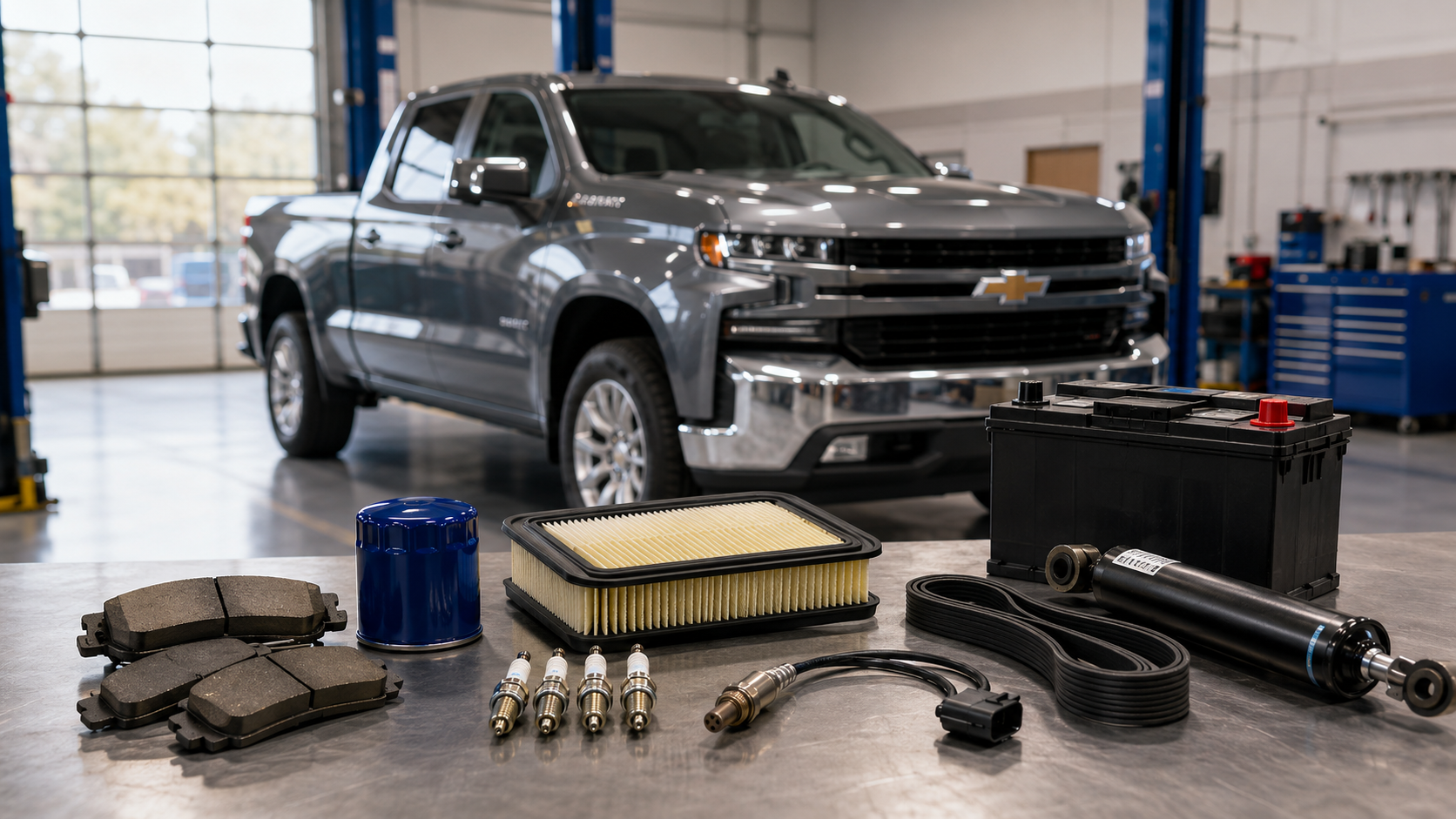
The Chevy Silverado is built for tough work, daily driving, towing, and long-term ownership, but routine wear still happens. Some of the most common Chevy Silverado parts that need replacing include brake pads, oil filters, air filters, spark plugs, oxygen sensors, batteries, belts, alternators, water pumps, shocks, and suspension components. Using OEM GM parts helps maintain factory-style fit, performance, and reliability. For best results, shop by VIN and choose Silverado-compatible parts from trusted categories like GM brake pads, GM oil filters, GM air filters, and GM parts and accessories.
Introduction: Keeping Your Chevy Silverado Ready for the Road
The Chevy Silverado is one of the most dependable trucks in the GM lineup, but even a well-built truck needs regular maintenance. Whether you drive your Silverado for work, towing, hauling, road trips, or everyday errands, parts naturally wear down over time. Knowing what to watch for can help you plan repairs before small issues turn into bigger problems.
This guide covers The Most Common Chevy Silverado Parts That Need Replacing and explains why OEM GM parts are often the best choice for Silverado owners. It also helps answer questions about common Silverado problems in a practical, parts-focused way.
Not every Silverado will need the same repairs at the same mileage. Driving conditions, engine type, towing habits, weather, and maintenance history all matter. Still, certain parts tend to wear more often because they handle heat, friction, vibration, electrical load, or heavy-duty use.
Why Silverado Parts Wear Out Over Time
A Silverado is designed to handle demanding use, but many of its systems work hard every time you drive. Brake pads create friction to stop the truck. Filters catch dirt and debris. Belts move engine accessories. Spark plugs fire thousands of times per minute. Suspension parts absorb bumps, payload weight, and road impact.
Over time, these parts lose effectiveness. Some wear out slowly, while others may fail suddenly if ignored. For example, a clogged air filter can reduce engine efficiency, worn brake pads can affect stopping performance, and a weak alternator can cause battery or electrical problems.
That is why Silverado owners should pay attention to maintenance intervals, warning signs, and fitment accuracy. Choosing the right part matters because Silverado models can vary by year, engine, cab size, bed length, drivetrain, towing package, brake package, and trim level.
Common Chevy Silverado Problems Linked to Replacement Parts
Many common Silverado problems are connected to normal wear items. Squeaking brakes may point to worn brake pads. Rough starts may point to spark plugs, battery issues, or fuel delivery concerns. A check engine light may be connected to oxygen sensors, emissions parts, or ignition components. Overheating may involve the thermostat, radiator, water pump, or coolant system parts.
The important thing is to match the symptom to the right system instead of guessing. Replacing parts at the right time can help your Silverado continue to perform the way GM intended.
The Most Common Chevy Silverado Parts That Need Replacing
1. Brake Pads and Brake Components
Brake pads are one of the most common Silverado wear items. Trucks are heavier than cars, and towing or hauling can add even more braking demand. Signs of worn brake pads may include squealing, grinding, longer stopping distance, vibration, or a brake warning light.
When servicing your Silverado brakes, choose GM brake pads designed for the correct model, year, and brake system. Brake fitment can vary by truck configuration, so checking your VIN before ordering is a smart step.
2. Oil Filters
Regular oil changes help protect your Silverado engine from wear, heat, and contamination. The oil filter captures debris as oil circulates through the engine. If the filter becomes restricted or low quality, it may reduce oil flow and protection.
OEM GM oil filters are designed around GM engine requirements, making them a practical choice for routine Silverado maintenance.
3. Engine Air Filters
Your Silverado’s engine air filter helps keep dirt and debris out of the intake system. A dirty air filter can affect airflow, throttle response, and engine efficiency. Trucks driven on dusty roads, job sites, or rural routes may need air filter replacement more often.
Shop GM air filters that match your Silverado’s engine and intake design for proper fit and filtration.
4. Spark Plugs
Spark plugs help ignite the air-fuel mixture inside the engine. Worn plugs can cause rough idling, poor acceleration, misfires, reduced fuel economy, or hard starts. Silverado engines rely on the right plug design and heat range, so OEM-style replacement is important.
If your Silverado feels sluggish or runs unevenly, spark plugs may be part of the repair plan, especially on higher-mileage trucks.
5. Oxygen Sensors
Oxygen sensors monitor exhaust gases and help the engine control module adjust fuel mixture. A failing oxygen sensor may trigger a check engine light, reduce fuel economy, or affect emissions performance.
Because Silverado oxygen sensor fitment can vary by engine and exhaust configuration, use VIN-based lookup when shopping for GM oxygen sensors.
6. Batteries and Alternators
Your Silverado depends on a healthy charging system to start reliably and power electrical features. A weak battery, failing alternator, or worn starter can cause slow cranking, dim lights, warning messages, or no-start conditions.
Alternator output and electrical connections can vary by model and engine, so choosing the correct OEM replacement helps prevent charging issues after installation.
7. Belts and Tensioners
Drive belts help run accessories such as the alternator, power steering system, and air conditioning compressor. Over time, belts can crack, glaze, stretch, or squeal. A worn tensioner can also cause belt noise or poor accessory performance.
For Silverado owners who tow, idle often, or drive in hot climates, belt inspection should be part of regular maintenance.
8. Water Pumps, Thermostats, and Cooling Parts
Cooling system parts help regulate engine temperature. A failing water pump, stuck thermostat, worn radiator, or leaking hose can lead to overheating. Because Silverado engines work hard under load, cooling system health is especially important for towing and hauling.
OEM cooling parts are designed to match GM engine requirements, hose routing, and mounting locations, which can make installation more dependable.
9. Shocks, Struts, and Suspension Parts
Silverado suspension parts absorb road impact and help support ride control. Worn shocks, struts, control arms, bushings, or ball joints can cause clunking, uneven tire wear, poor handling, or a rough ride.
If your truck feels loose, bouncy, or unstable over bumps, suspension parts may need inspection. This is especially important if your Silverado regularly carries payload, tows trailers, or travels on rough roads.
10. Fuel Filters and Fuel System Parts
Fuel system parts help deliver clean fuel at the correct pressure. Depending on the Silverado model and engine, fuel-related issues may involve filters, pumps, injectors, or sensors. Symptoms can include hesitation, hard starts, stalling, or poor acceleration.
When replacing fuel-related parts, use GM-specific fitment details and consider GM fuel filters when applicable to your vehicle.
Step-by-Step: How to Choose the Right Silverado Replacement Parts
1. Start With Your VIN
Your Silverado’s VIN helps identify the exact engine, trim, drivetrain, and factory equipment. Use the GM VIN Decoder before ordering parts that vary by configuration.
2. Match the Repair to the Correct System
Do not replace parts based on symptoms alone. Brake noise, rough idle, overheating, or electrical issues can have more than one cause. Identify the system first, then narrow the part.
3. Choose OEM GM Parts When Fitment Matters
OEM GM parts are designed to match factory specifications. This matters for brake components, filters, sensors, cooling parts, suspension parts, and electrical components.
4. Review Fitment Notes Before Checkout
Check engine size, drivetrain, cab style, bed length, production notes, and package requirements. Silverado parts can vary more than many owners expect.
5. Replace Related Parts When Needed
Some repairs are easier when related parts are serviced together. For example, belts and tensioners may be inspected together, brake pads may be checked with rotors, and cooling repairs may include hoses or thermostats.
Recommended GM Parts Categories for Silverado Owners
For routine maintenance, start with oil filters, air filters, and fuel filters. These parts support everyday engine protection and performance.
For safety and control, prioritize brake pads, brake hardware, shocks, suspension components, and steering-related parts. Silverado trucks often handle heavier loads than passenger vehicles, so these systems deserve close attention.
For drivability and diagnostics, consider OEM spark plugs, oxygen sensors, alternators, starters, and fuel system parts. These components help your Silverado start, run, charge, and respond properly.
To browse a wider range of Silverado-compatible parts, visit GM Parts and Accessories and search by VIN, keyword, or part category.
Key Takeaways
- Brake pads, filters, spark plugs, oxygen sensors, belts, batteries, alternators, cooling parts, and suspension components are among the most common Silverado replacement parts.
- Common Silverado problems often come from normal wear, heavy use, towing, heat, or delayed maintenance.
- OEM GM parts help maintain factory-style fit, function, and reliability.
- Your VIN is the best tool for confirming the right Silverado part for your exact truck.
- Addressing worn parts early can help prevent more expensive repairs later.
FAQ
What parts wear out most often on a Chevy Silverado?
Common Silverado replacement parts include brake pads, oil filters, air filters, spark plugs, oxygen sensors, batteries, belts, alternators, water pumps, thermostats, shocks, suspension parts, and fuel system components.
What are common Silverado problems owners should watch for?
Common issues can include brake noise, rough idle, hard starts, check engine lights, overheating, weak charging, suspension noise, and reduced fuel economy. These symptoms are often tied to wear parts that need inspection or replacement.
Should I buy OEM parts for my Chevy Silverado?
OEM GM parts are a smart choice for Silverado repairs because they are designed to match GM factory specifications. They are especially useful for brakes, sensors, filters, cooling parts, electrical parts, and suspension components.
How do I make sure a Silverado part fits my truck?
Use your VIN when searching for parts. Your VIN helps confirm your Silverado’s engine, trim, drivetrain, and factory options, which can affect part fitment.
Are Silverado brake pads different by model?
Yes. Brake parts can vary by year, trim, drivetrain, wheel size, towing package, and brake system. Always confirm fitment before ordering replacement brake pads.
When should I replace Silverado filters?
Follow your owner’s manual for service intervals. Driving in dusty conditions, towing, heavy traffic, or extreme weather may require more frequent filter replacement.