


OEM vs Aftermarket GM Parts: What’s the Difference?
TL;DR
OEM GM parts are made to match the original parts installed on your Chevrolet, GMC, Buick, or Cadillac vehicle. Aftermarket parts are made by third-party companies and may vary in fit, materials, and performance. If you are asking, “are OEM parts worth it,” the answer is often yes for repairs involving fitment, safety, electronics, engine performance, braking, cooling, and long-term reliability. For the best match, shop by VIN and choose factory-style parts from trusted GM categories like GM brake pads, GM oil filters, GM oxygen sensors, and GM parts and accessories.
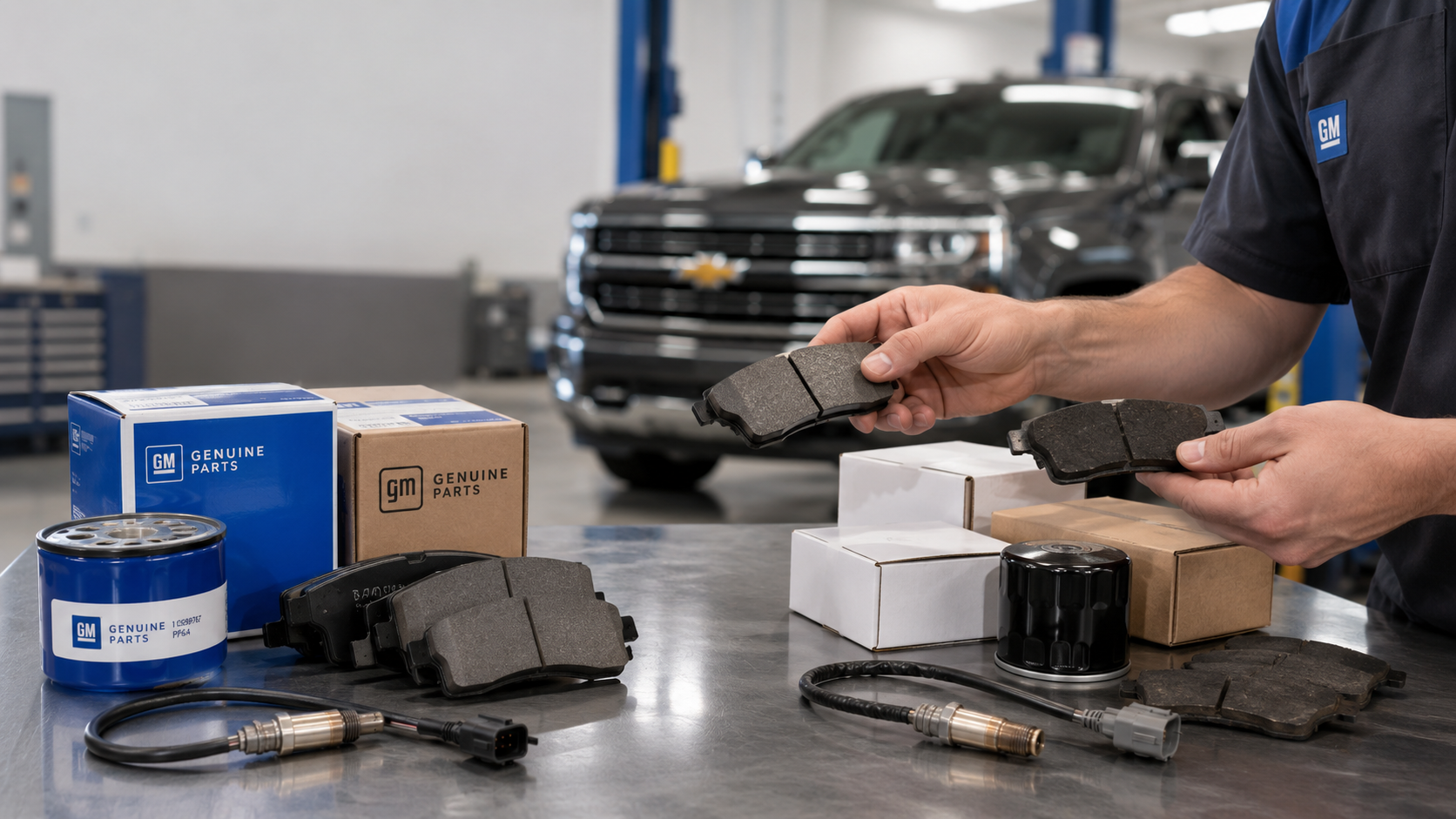
Introduction: Choosing Parts for Your GM Vehicle
When your GM vehicle needs maintenance or repair, one of the first choices you face is whether to buy OEM or aftermarket parts. It sounds simple, but the difference can affect fit, performance, installation time, and how confident you feel after the repair is complete.
For GM owners, this decision matters because many Chevrolet, GMC, Buick, and Cadillac vehicles use parts that vary by engine, trim, drivetrain, body style, towing package, and factory equipment. A part that looks close online may not be the right match once you start the repair. That is why understanding OEM vs Aftermarket GM Parts: What’s the Difference? can help you shop with better confidence.
This guide explains what each option means, where OEM parts make the most sense, and how to choose the right GM replacement part for your vehicle.
The Problem: Aftermarket Parts Can Be Hard to Compare
Aftermarket parts are often marketed as affordable alternatives, but they are not all built the same way. Some aftermarket parts are designed to fit many vehicles across different brands or trim levels. That broad coverage can be convenient, but it can also create uncertainty for GM owners who need a precise fit.
The biggest challenge is that aftermarket listings may not always account for GM-specific details. Your vehicle may require a specific connector, bracket, sensor position, filter size, brake pad shape, cooling system design, or emissions-related component. Even a small difference can lead to poor fitment, installation delays, warning lights, noise, vibration, or reduced performance.
That does not mean every aftermarket part is automatically wrong. It means you need to understand what you are trading off. For many GM repairs, especially those tied to safety, drivability, or electronic systems, OEM parts are often the more reliable path.
What Are OEM GM Parts?
OEM stands for Original Equipment Manufacturer. In simple terms, OEM GM parts are designed to match the parts your GM vehicle was built with at the factory. They are made to meet GM specifications for fit, function, and compatibility.
For example, an OEM oil filter is designed around your GM engine’s filtration needs. An OEM oxygen sensor is made to work with your vehicle’s emissions and engine management systems. OEM brake pads are designed to fit the correct calipers and support the braking feel expected from your GM vehicle.
When you shop for OEM parts through GM Parts Center, you can browse categories tied directly to GM vehicles, including air filters, fuel filters, alternators, starters, radiators, and other factory replacement parts.
What Are Aftermarket GM Parts?
Aftermarket parts are made by companies other than the original vehicle manufacturer. These parts may be designed as replacements, upgrades, budget options, or universal-fit solutions. Some are built for one specific application, while others are made to cover many vehicles.
The main advantage is choice. Aftermarket parts can vary widely in price, material, availability, and design. The downside is that quality and fitment can also vary. For GM owners handling a repair at home or trying to avoid repeat work, that variation can be frustrating.
With aftermarket parts, the burden is often on the buyer to verify compatibility. With OEM GM parts, the part is designed around the vehicle’s original specifications, which can make the buying and installation process more straightforward.
Are OEM Parts Worth It?
For many GM repairs, yes, OEM parts are worth it. They are especially valuable when the part affects safety, drivability, emissions, electronics, cooling, or long-term performance.
OEM parts can help reduce guesswork. Instead of comparing several third-party designs, you are choosing a part built to match your GM vehicle’s original requirements. That can be helpful for parts like brake pads, sensors, fuel pumps, water pumps, thermostats, alternators, starters, and electrical components.
OEM parts may cost more upfront in some cases, but the value often comes from better fitment confidence, fewer installation issues, and factory-style performance. If a less expensive part does not fit correctly or causes a repeat repair, the initial savings may disappear quickly.
Step-by-Step: How to Choose Between OEM and Aftermarket GM Parts
1. Identify the Type of Repair
Start by asking what the part does. If it affects braking, steering, engine operation, emissions, cooling, or electrical communication, OEM is usually the safer choice. For example, shop VIN-matched GM brake pads for brake repairs and GM oxygen sensors for emissions-related repairs.
2. Check Your VIN
Your VIN helps identify your exact GM vehicle configuration. This matters because two vehicles from the same model year may use different parts based on engine, trim, drivetrain, or factory options. Use the GM VIN Decoder before ordering if you are unsure.
3. Compare Fitment Details
Look beyond the part name. Confirm engine size, body style, side position, connector type, and any notes about factory packages. GM-specific fitment details are especially important for parts such as radiators, alternators, fuel pumps, and sensors.
4. Consider Installation Time
If a part is difficult to access, OEM is often worth considering. Replacing a water pump, starter, fuel pump, or sensor can take time. Choosing a part designed to fit correctly can help avoid doing the job twice.
5. Think About Long-Term Ownership
If you plan to keep your GM vehicle, OEM parts can support consistent maintenance and repair quality. This is especially helpful for trucks, SUVs, and daily drivers that need dependable performance over time.
Recommended GM Parts and Categories
For routine maintenance, OEM filters are a practical place to start. Shop GM oil filters, GM air filters, and GM fuel filters to help support proper engine protection, airflow, and fuel system performance.
For safety-related service, focus on OEM brake components. GM-specific brake pads are designed for the correct fit and braking system compatibility, which matters for daily driving, towing, and stop-and-go traffic.
For drivability and diagnostic repairs, OEM sensors and electrical parts are often the better choice. Categories like oxygen sensors, alternators, starters, and fuel pumps can depend on exact GM vehicle specifications.
For cooling system repairs, consider OEM radiators, thermostats, hoses, and water pumps. GM engines rely on properly matched cooling components to manage operating temperature and prevent avoidable wear.
To browse more factory replacement options, visit GM Parts and Accessories and narrow your search by vehicle, VIN, or part category.
Key Takeaways
- OEM GM parts are designed to match your vehicle’s original factory specifications.
- Aftermarket parts can vary in fit, quality, materials, and compatibility.
- OEM parts are often worth it for braking, cooling, electrical, emissions, and engine-related repairs.
- Your VIN is one of the best tools for finding the correct GM part.
- Choosing OEM parts can help reduce installation problems and fitment uncertainty.
FAQ
What is the main difference between OEM and aftermarket GM parts?
OEM GM parts are designed to match the original factory parts for your Chevrolet, GMC, Buick, or Cadillac vehicle. Aftermarket parts are made by third-party companies and may vary in design, fit, materials, and performance.
Are OEM parts worth it for GM vehicles?
Yes, OEM parts are often worth it when fitment, safety, performance, or long-term reliability matters. They are especially useful for brake parts, sensors, filters, cooling parts, alternators, starters, and electrical components.
Are aftermarket parts always bad?
No. Some aftermarket parts can work well, but quality and fitment vary. For GM-specific repairs, OEM parts provide a clearer match to your vehicle’s factory design.
Should I use my VIN when buying GM parts?
Yes. Your VIN helps identify your exact vehicle configuration, including engine, trim, drivetrain, and factory equipment. This can help you avoid ordering a part that looks similar but does not fit correctly.
Which GM parts should I buy OEM?
Consider OEM for brake pads, oil filters, air filters, fuel filters, oxygen sensors, alternators, starters, radiators, thermostats, water pumps, and parts tied to electronics, emissions, or safety systems.